
Art Therapy in Sydney: What to Expect and How It Can Support Your Mental Wellbeing
Choosing a therapist can feel overwhelming. Choosing an art therapist can feel even more confusing, especially if you’ve never experienced therapy before.
One of the first things people tell me when they walk into my studio is, “I’m not artistic.” Others quietly admit they don’t know why they’re there, feel a little awkward, or wonder whether anything will come from the session.
The good news is that art therapy isn’t about being artistic. It’s about being curious.
Mindkshetra is a creative wellness studio based in Wentworthville, Western Sydney, welcoming clients from across Greater Sydney who are looking for a culturally responsive approach to psychotherapy, counselling and art therapy.
What is Art Therapy?
Art therapy is a form of psychotherapy that combines counselling with creative expression to support mental health and emotional wellbeing. Rather than focusing on artistic ability, it uses the creative process as another language to explore thoughts, emotions and experiences that may be difficult to express through words alone.
The artwork is about expression, not perfection.
Why Choose Art Therapy Instead of Counselling?
Art therapy doesn’t replace counselling—it expands it. Sometimes life presents challenges such as grief, anxiety, trauma or major life transitions that leave us struggling to find the right words. Art therapy offers another pathway into those conversations.
Every one of us has created something at some point in our lives. We have doodled, coloured, arranged objects, taken photographs or built something with our hands. Art therapy simply draws upon this natural human capacity to create.
Sometimes a session might involve painting, clay, collage, watercolour, sand tray work, photography, journalling or creating with found objects. Each material offers a different way of exploring thoughts and emotions. The focus is never on artistic skill; it is about understanding yourself in a different way.
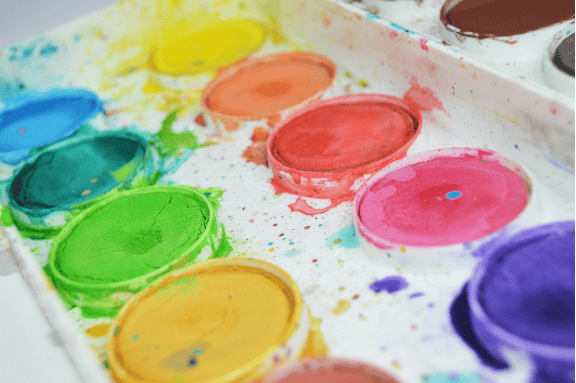
Watercolours at the Studio, Mindkshetra, Western Sydney
How Does Art Therapy Work?
No two art therapy sessions are ever the same because no two people are the same.
Your first session is simply an opportunity for us to get to know one another. We’ll explore what has brought you to therapy, what you hope to achieve and whether I am the right therapist for you.
At Mindkshetra, I may invite you to respond to a creative prompt or art directive that gently explores a particular theme, emotion or life experience. You will always have choices about the materials you use and there is never any expectation to create something beautiful.
As you create, conversations naturally unfold. Together we become curious about the meaning you make from your artwork and experiences. I don’t analyse your artwork; I’m interested in what it means to you. Like counselling, art therapy is guided by the goals you bring into the room.
What Does a Typical Session Look Like?
Many sessions begin with a cup of tea and a conversation about what feels important that day. From there, we might move into a creative activity, spend time reflecting on what emerges, or simply continue talking. Sometimes the session involves more creating than talking, while other times it is the conversation itself that takes centre stage. Every session concludes by identifying practical tools, strategies or insights you can begin applying in everyday life.
Is Art Therapy Right for Me?
Art therapy can benefit children, teenagers, adults, parents and NDIS participants. It may support people experiencing anxiety, depression, grief, trauma, stress, burnout, emotional regulation difficulties, relationship concerns, identity questions or major life transitions. Therapy is always tailored to your individual goals rather than a diagnosis.
Why Teenagers Often Enjoy Art Therapy
One of the things I enjoy most about working with teenagers is their natural curiosity. Many young people find it easier to create while they talk than to sit face-to-face answering questions. Once the pressure of finding the ‘right’ words is removed, conversations often emerge naturally through the creative process.
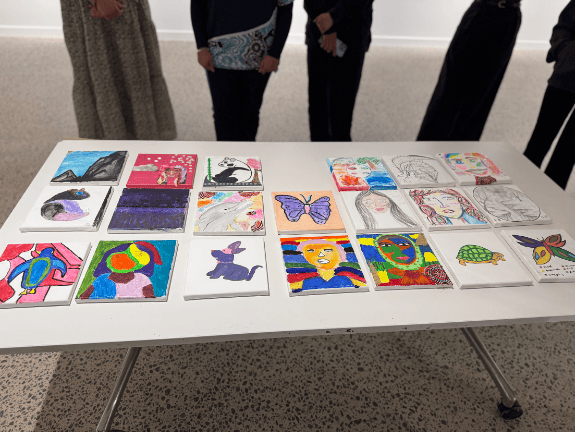
Youth Workshop 2025, Granville Community Centre
Let’s Clear Up a Few Myths
The biggest myth about art therapy is that the therapist analyses your artwork to determine your state of mind. That isn’t how I practise. I believe you are the expert in your own life, and I’m far more interested in what your artwork means to you than what I think it should mean.
Another misconception is that you need artistic ability. In reality, many people leave their first session delighted—not because they have become artists, but because they rediscover a creative part of themselves they thought they had lost.
What Clients Often Tell Me
Before their first session, clients often tell me:
• ‘I’m not artistic.’
• ‘I don’t know why I’m here.’
• ‘I feel a bit silly.’
• ‘I don’t think anything will come from this.’
By the end of the session, many tell me they feel lighter, surprised by how naturally the conversation unfolded, and delighted to discover they are far more creative than they ever believed.
A Favourite Creative Prompt
One prompt I often use is, ‘If you were an animal or a food, what would you be, and why?’ It sounds playful, but it gently invites people to describe themselves from a different perspective. Suddenly, conversations that might have felt awkward become easier because we’re speaking through metaphor rather than judgement.
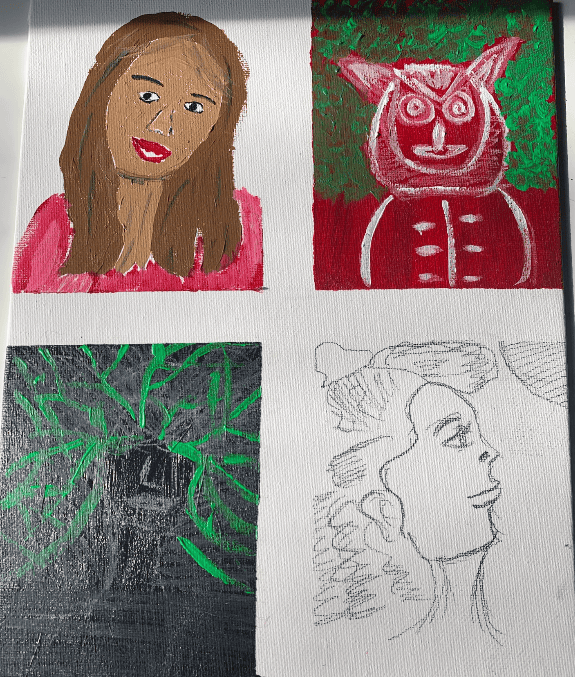
Self-portrait. Mindkshetra Studio, Wentworthville.
How I Know Therapy Is Working
Therapy isn’t about getting everything right. I know someone is ready to finish therapy when they begin applying the tools, strategies and skills we’ve explored together in their everyday lives. It won’t always be perfect, but they’re willing to practise, reflect and continue growing.
One of my favourite memories is a client making fun of one of my own drawings. We both laughed. It was a wonderful reminder that therapy doesn’t always have to be serious; humour often becomes part of healing too.
Why I Chose to Practise in Western Sydney
I chose to establish Mindkshetra in Wentworthville because Western Sydney is home. I studied at Western Sydney University, I live in this community, and I wanted to give back to the people and places that have shaped my own journey.
Today I welcome clients from across Greater Sydney, including Parramatta, Westmead, Toongabbie, Pendle Hill, Merrylands, Granville, Auburn, Guildford, Greystanes, Blacktown, Seven Hills, Winston Hills, Harris Park, Wentworth Point and surrounding suburbs.
A Courageous First Step
I wish every first-time client knew that seeking therapy is a sign of courage. It is one of the greatest investments you can make in yourself.
For sixty minutes, you don’t have to be anyone other than yourself.
At Mindkshetra, I hope people leave feeling heard, listened to and more connected to themselves than when they arrived.
Written by:
Rupa Parthasarathy is a cultural artist, art psychotherapist, counsellor, clinical supervisor and founder of Mindkshetra, a Western Sydney–based creative wellbeing studio and social enterprise. A first-generation Indian Australian and native Tamil speaker, she works at the intersection of culture, art and mental health, helping young people and communities integrate creative practices into everyday wellbeing. In 2025, she received the South Asian Women in Business Award for her work through Mindkshetra.
More Articles: