
Group Therapy in Wentworthville: Finding Healing in Shared Spaces
Introduction: My Journey into Group Therapy
The first time I heard about group therapy was when I was studying to be a counsellor.
This specialisation both intrigued me and scared me. In most situations, being in a group can feel overwhelming. So I was genuinely curious — what is group therapy, really? And more importantly, how can sitting with strangers possibly feel therapeutic?
At the time, I imagined awkward silences, people competing to speak, or individuals withdrawing into themselves. I wondered how vulnerability could possibly feel safe in a room full of others. Yet as I progressed through my training and began observing experienced facilitators, something shifted. I saw that group work is not accidental or chaotic. It is intentional, structured, and deeply psychological.
Over the years — through formal study, reading foundational group psychotherapy texts, and facilitating my own therapy groups — I have witnessed something powerful: healing expands in shared spaces. People who feel isolated begin to feel understood. Individuals who struggle with relationships begin to see their patterns more clearly. Those living with anxiety or depression realise they are not alone.
Group therapy creates a micro-community where real-life dynamics gently surface. The way we avoid, connect, interrupt, over-function, or withdraw often shows up naturally. With skilled guidance, these patterns become opportunities for growth rather than sources of shame.
Today, I no longer see group therapy as overwhelming. I see it as courageous. I see it as a place where people practise being human together — safely, respectfully, and with support. And in my own practice, I have found that integrating art-based approaches deepens that experience even further, allowing expression beyond words.
What Is Group Therapy?
Group psychotherapy is a structured form of therapy where a small number of individuals meet regularly with a trained therapist to explore emotional, relational, and psychological challenges together. Unlike informal peer chats or online forums, group therapy is professionally facilitated and grounded in psychological theory and ethics.
In a group setting, members are invited to share experiences, reflect on emotions, and offer constructive feedback. The therapist’s role is to create psychological safety, maintain confidentiality, and guide discussions so they remain respectful and purposeful. Boundaries and privacy are clearly discussed at the outset to ensure everyone understands the importance of mutual trust.
One of the most powerful aspects of group therapy is what psychologist Irvin Yalom describes as “universality” — the realisation that others struggle with similar issues. For someone experiencing anxiety, depression, or relational difficulties, this can be profoundly relieving. Isolation often magnifies suffering. Shared understanding reduces it.
Group therapy also provides interpersonal learning. Members gain insight into how they are perceived by others and how they relate in social settings. This feedback, when delivered compassionately, can accelerate growth in ways individual therapy sometimes cannot.
Sessions may include discussion, reflection, structured exercises, skill-building activities, or experiential methods. Some groups focus on psychoeducation and coping skills, while others emphasise relational process. Many, like those I facilitate, integrate both structure and emotional exploration.
Ultimately, group therapy is not about losing individuality in a crowd. It is about discovering yourself more clearly through connection. The group becomes both mirror and support system — a safe place to explore, learn, and practise new ways of relating.
How I Use Art-Based Techniques in Group Therapy
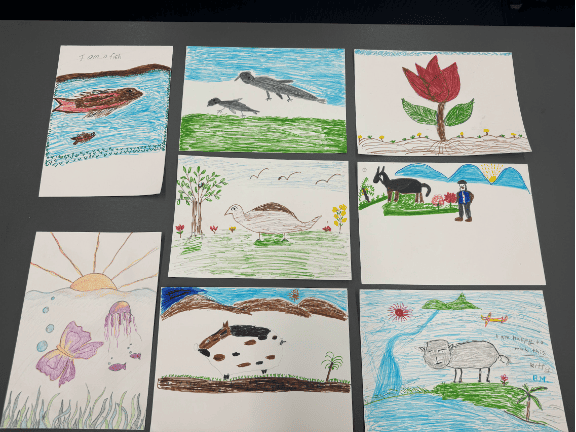
As an Art Psychotherapist, I integrate art therapy intentionally within group settings. Art offers a unique pathway into emotional processing. When words feel overwhelming or inaccessible, creative expression provides an alternative language.
In group psychotherapy, art-based techniques reduce performance pressure. Members do not have to immediately articulate complex feelings. Instead, they can draw, sculpt, collage, or use colour to represent internal experiences. This often lowers anxiety and supports nervous system regulation.
For example, in anxiety-focused groups, I may invite members to create a visual “map” of their anxiety — illustrating where it shows up in the body and how it impacts daily life. This externalisation allows the group to reflect together on the image rather than placing all attention on the individual. The artwork becomes a shared focal point, fostering safety.
With adolescents and children, art-based group therapy can be particularly transformative. Young people often communicate more freely through image and metaphor. Creative exercises build emotional literacy, strengthen peer connection, and develop social skills in a developmentally appropriate way.
Art also enhances empathy. When group members witness one another’s creations, they gain insight into experiences that may not have been verbally shared. This deepens compassion within the group and strengthens cohesion.
Importantly, artistic skill is never the goal. The focus is expression, reflection, and meaning-making. Through art-based group therapy, individuals explore identity, boundaries, coping resources, and relational patterns in ways that feel embodied and authentic.
Integrating art into group psychotherapy bridges individual insight with collective healing. It allows each member’s inner world to be seen, respected, and understood within a supportive community context.
The Structure and Stages of Group Therapy
Most therapy groups move through predictable stages of development: forming, storming, norming, and performing. Understanding these stages helps normalise the emotional shifts that occur within groups.
During the forming stage, members are typically polite and cautious. Trust is still
developing, and participants may share more surface-level information. The therapist
focuses on establishing safety, setting boundaries, and clarifying expectations.
In the storming stage, differences begin to emerge. Members may experience discomfort, misunderstandings, or subtle conflict. While this can feel unsettling, it is a healthy part of group development. With guidance, these moments become opportunities to practise communication and boundary-setting.
As the group moves into norming, cohesion strengthens. Members begin to feel more
comfortable offering honest reflections and supporting one another. Shared norms around respect, confidentiality, and constructive feedback become clearer.
Finally, in the performing stage, deeper therapeutic work unfolds. Members are more willing to explore vulnerability, relational patterns, and emotional risks. Insight often accelerates during this phase.
Throughout these stages, the therapist maintains structure and emotional safety. Sessions may incorporate discussion, reflection exercises, skill-building strategies such as grounding techniques and creative processes.
Understanding that discomfort is part of growth helps members remain engaged rather than withdrawing prematurely. Group therapy is a dynamic process — one that mirrors
real-world relationships while offering guided support for change.
Who Is Group Therapy Suitable For?
Group therapy can be highly effective for individuals experiencing anxiety, depression, social difficulties, or relational challenges. It is particularly beneficial for those who feel isolated and long for connection with others who understand similar struggles.
For anxiety and depression, group therapy offers both skill development and community. Members learn coping strategies such as grounding techniques while
also receiving peer validation. This combination of education and connection
often strengthens treatment outcomes.
Group therapy for children and adolescents supports emotional regulation, social skill development, and peer confidence. Young people learn not only from the therapist but also from observing one another.
However, group therapy is not always suitable for everyone at every stage. Individuals in acute crisis, experiencing severe trauma symptoms without stabilisation, or requiring intensive one-to-one support may benefit from individual therapy first. A careful assessment process ensures that group participation feels safe and appropriate.
There is no single “best” therapy for anxiety and depression. Individual therapy offers privacy and depth. Group psychotherapy offers relational learning and shared growth. Often, a combined approach is most supportive.
Ultimately, group therapy is about courage — the courage to show up, share space, and grow alongside others. It is about discovering that healing does not have to happen alone. And sometimes, the most powerful insight comes not just from being heard, but from hearing someone else say, “Me too.”
Why Does It Work?
Healing does not only happen through talking. Sometimes it happens through drawing, witnessing, listening, and being witnessed.
If you’re in Wentworthville and curious about whether group therapy — perhaps even an art-based therapy group — could support your mental health journey, reach out.
Maybe I’ll see you — and your sketchbook — in the circle.
Written by:
Rupa Parthasarathy is a cultural artist, art psychotherapist, counsellor, clinical supervisor and founder of Mindkshetra, a Western Sydney–based creative wellbeing studio and social enterprise. A first-generation Indian Australian and native Tamil speaker, she works at the intersection of culture, art and mental health, helping young people and communities integrate creative practices into everyday wellbeing. In 2025, she received the South Asian Women in Business Award for her work through Mindkshetra.
More Articles: